“The glory of gardening: hands in the dirt, head in the sun, heart with nature. To nurture a garden is to feed not just the body, but the soul.” — Alfred Austin
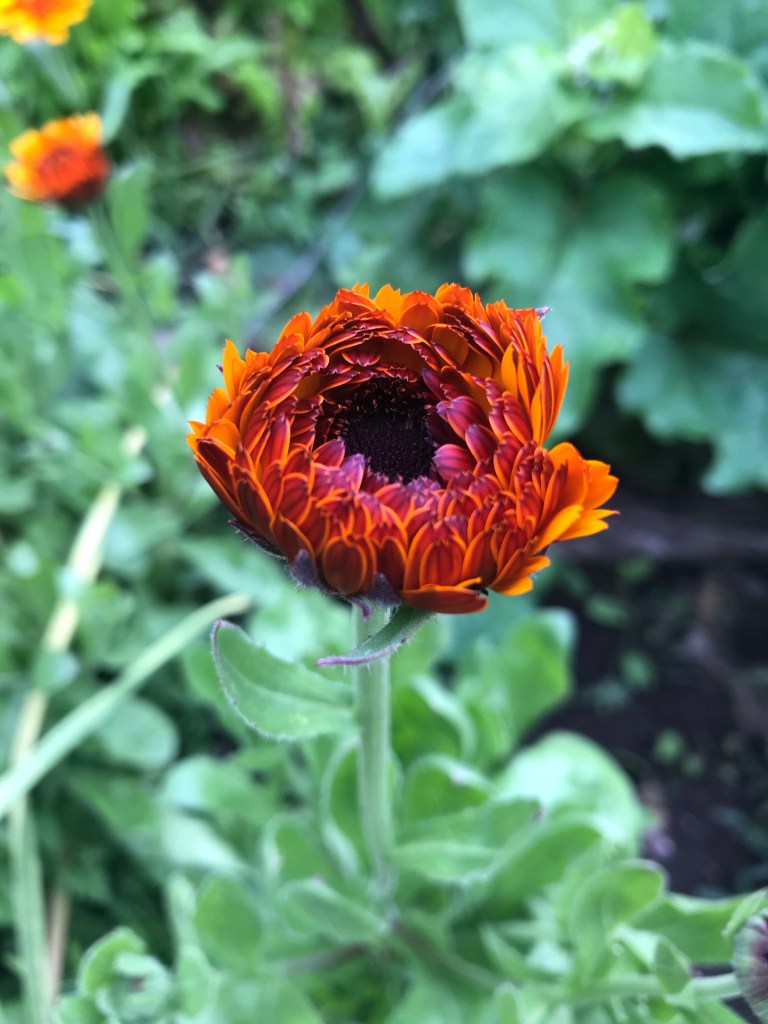
The potager style of gardening first originated in Medieval France, the intention being that you could make a whole hearty ‘potage’ soup from the myriad ingredients grown in this varied and complimentary little garden. Functionality married softly with aesthetics in burgeoning, often geometric, arrangements of edibles and ornamentals.
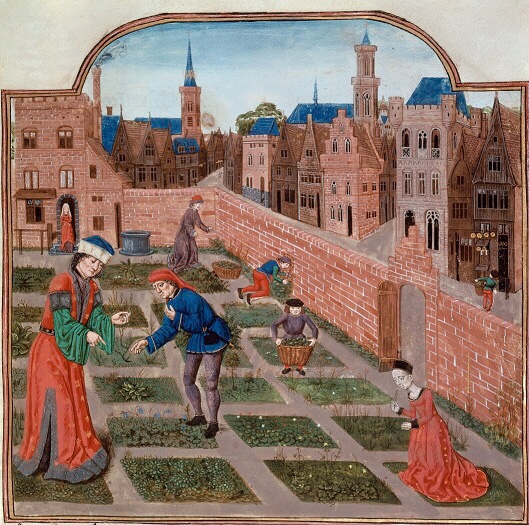
Not only a feast for the belly of the gardener, after the mud is shaken from the stalks and the last striped stowaway snail plucked from the leaves, the potager is also a delight to the eye with an effervescent mix of edibles, medicinal plants and ornamentals, many also falling into the versatile category of ‘edimentals’ (ornamental plants with edible qualities).
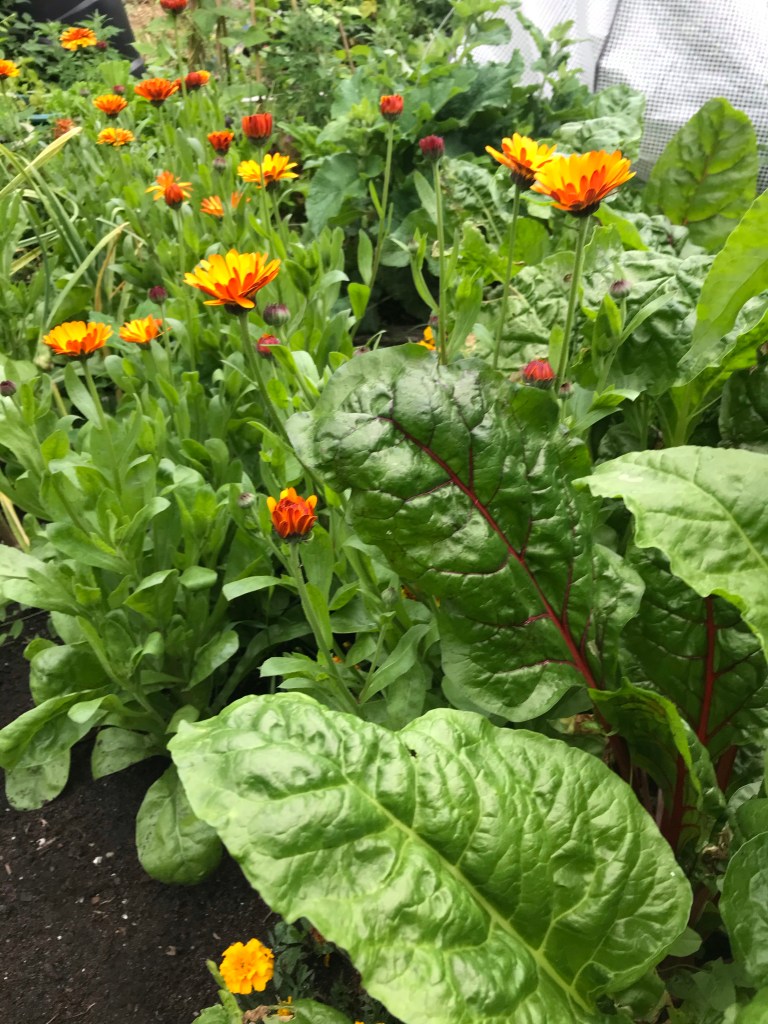
Calendula and French Marigold for pollinators and edible flower use grown among Swiss Chard.
The potager garden lends itself well to small spaces and compact gardening meaning that the most humble space can be utilised to create a kitchen and cut flower garden. Herbs mix with the vegetables they will accent and all are pulled together with sprays of flowers that can be cut for brighten up the kitchen while you cook! Ensure that you plant complimentary varieties together such as Basil and marigolds with tomatoes, alliums by carrots and the Three Sisters planting technique of Native American people of squash, corn and beans.
A useful guide to companion planting is here.
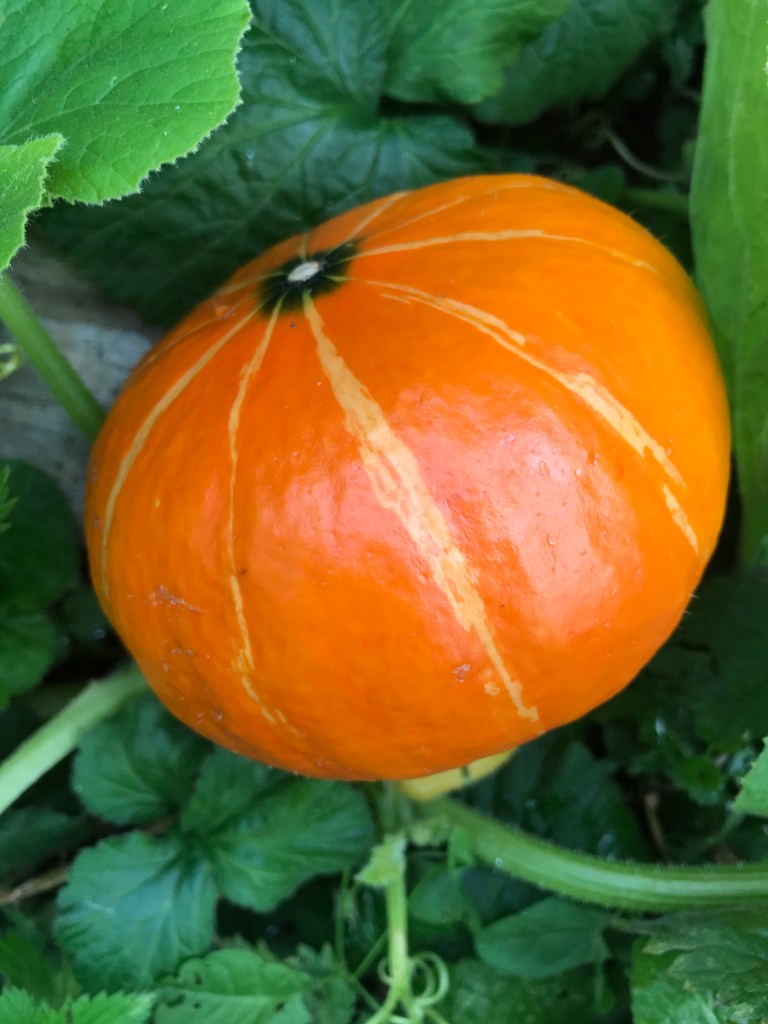
When considering what to plant, especially in a compact space, consider more compact varieties or plants that climb or can be trained upwards so you can make the most of the space available. For example instead of sprawling on the ground smaller, vining varieties of squash like ‘Black Futsu’ and ‘Potimarron’ can be trained over a support or even arch to grow and hang down. In keeping with the companion planting ethos you can also co-plant bean seeds alongside the squash, especially dry bean varieties for less disturbance of the growing squash. Good varieties would be ‘Cherokee Trail of Tears’ black bean and ‘Lingua Di Fuoco’ borlotti bean. Imagine the verdant green leaves of both and the vibrant orange of the squash combined with the fire-striped red and white borlotti pods – then come autumn you have a beautiful duo of squash and beans to harvest for a rib-sticking warming winter stew. The key is in the harmony.
I will always champion and grow (and also save!) heirloom and open-pollinated seed and this opens up some fantastic varieties that have characteristics well suited to the potager garden. A lot of heirloom peas are climbing varieties so you can save space growing the up an obelisk of canes, perhaps with some sweet peas intertwined for fragrance and cutting. Some good varieties are ‘Rosakrone’, a Swedish heirloom translating to ‘crown of roses’, which has a beautiful corona of pink and white flowers atop five foot stems; another is ‘Mummy’s Pea’ which emerged in the 19th century amid a very side-show titillation myth of having been found in an ancient Egyptian funeral urn in a mummy’s tomb! Hopefully no curse follows them…..
Other varieties have characteristics such as unusual colour to brighten up the plot ‘Blauwshokker’ is a deep purple pea, easy to find on it’s vigorous stems and ‘Golden Sweet’ is a yellow mangetout with beautiful purple flowers.
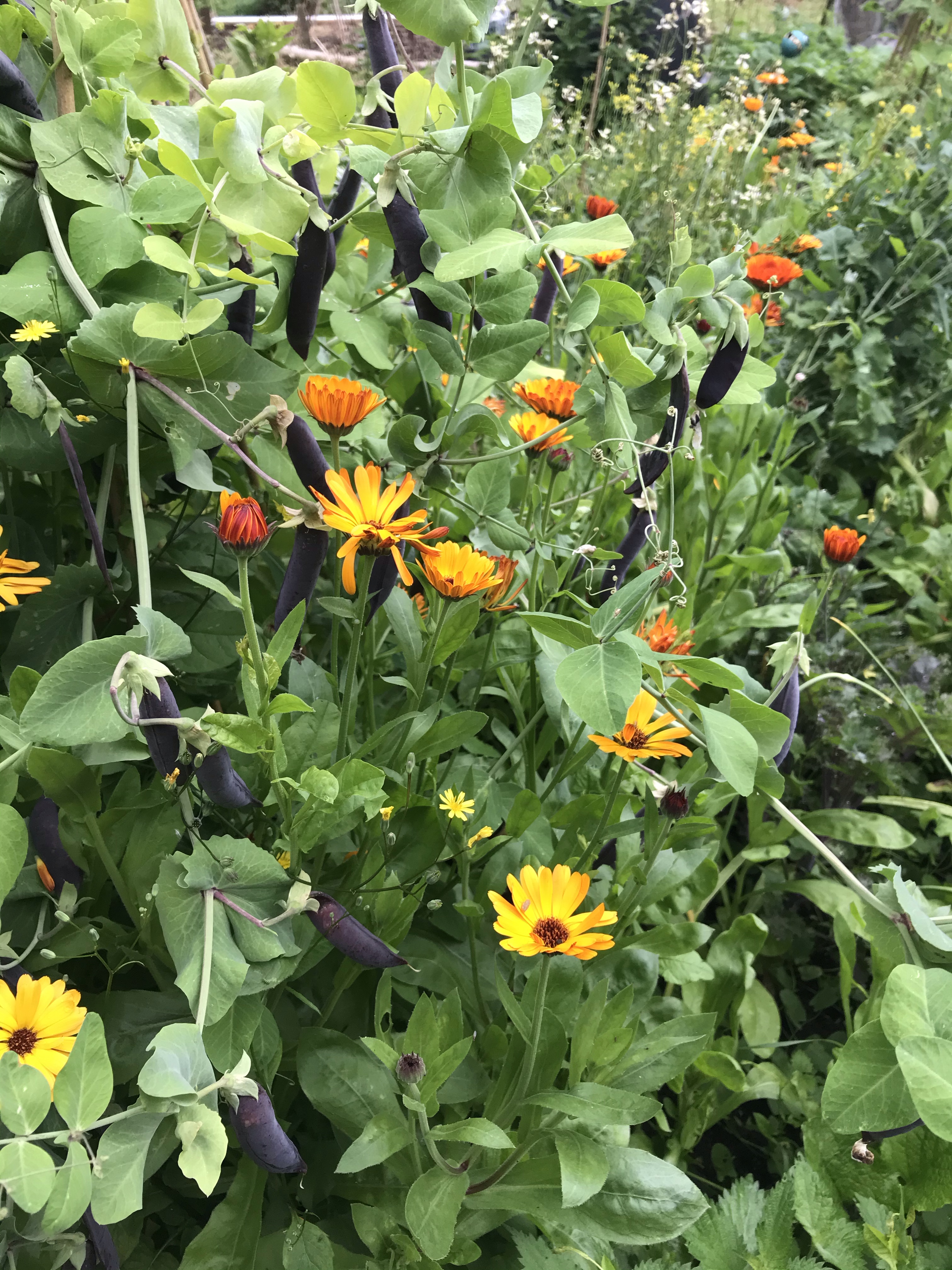
In roots try taller beets to maximise space like ‘Sangunia’ and ‘Flaming Barrel’ and of course the wonderful colourful heirloom carrots like ‘Lila Lu’, ‘Jaune du Doubs’ and more traditional ‘Manchester Table.’
The heirloom varieties really catch the eye and you can save seed and know you are preserving these ancient and sometimes at risk of extinction varieties.
Some companion flowers to consider are Calendula ‘Indian Prince’ with vivid orange upper petals and deep maroon below, Borage for little blue stars among grey-green leaves, sweet pea – go mad on these!, Dill for acid yellow-green frothy umbels atop feathery leaves and old reliable French Marigolds who come in a variety of compact double or taller single flowered varieties which pollinators love.
I began my potager journey last year and it established well and looked great! I learnt some lessons along the way (don’t let the calendula go too mad!) and have improved my knowledge on companion planting and creating better structure. All these are things I will apply this year to, hopefully, make the garden more harmonious and plentiful; and of course more attractive to our hard working pollinators and nature’s pest controllers!
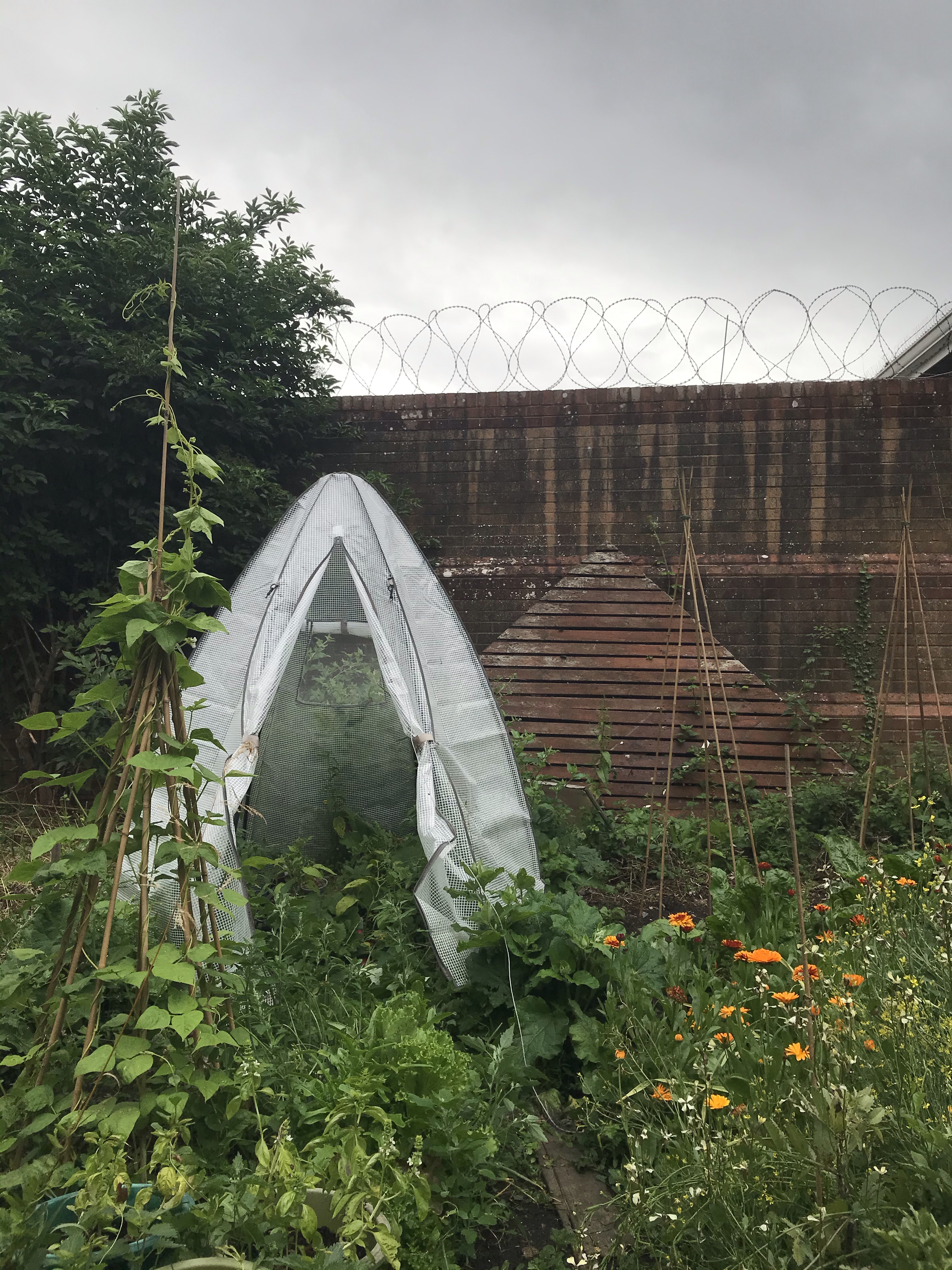
In the PHG we have several different types of growing space, some more formal allotment style like the Communal Veg Bed and some looser individual plots with less structure, but mine is the little potager in the corner and long may she bloom and provide in gently organised chaos. I look forward to writing more on the evolution of this little garden as she grows!
A.
 Welcome to The Pumphouse Garden
Leave a comment