Chelsea Physic Garden: Explorations into a Dyer’s Garden.
‘There are no worthless herbs — only the lack of knowledge.’
– Avicenna
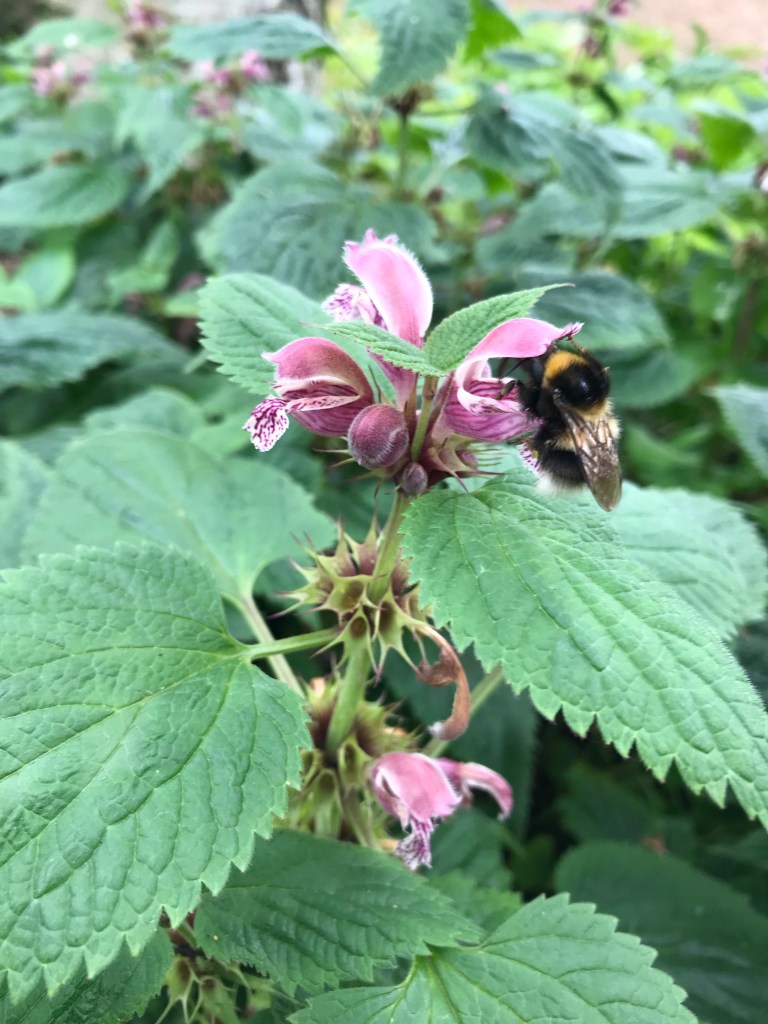
LAST time I wrote about the Mediterranean wild herbs in Corsica, names like Myrtle, Rosemary, Immortelle their names sounding like botanical counterparts to those of the plaster saints that stand beatific in stucco shrines across the island, and how could we bring these wild herbs into the PHG and learn from their uses and natural symbiosis with each other.
My second blog on the herb garden brings us much closer to home, back to the dove-grey skies of England, to a place that has already pioneered the study and cultivation of useful, medicinal and culinary plants – Chelsea Physic Garden.
Where the tough, fragrant herbs of the maquis had their potency enhanced by their wild surroundings the plants I am going to talk about now are swaddled in an embrace of red brick, a unique microclimate of botanic fecundity in the heart of London.
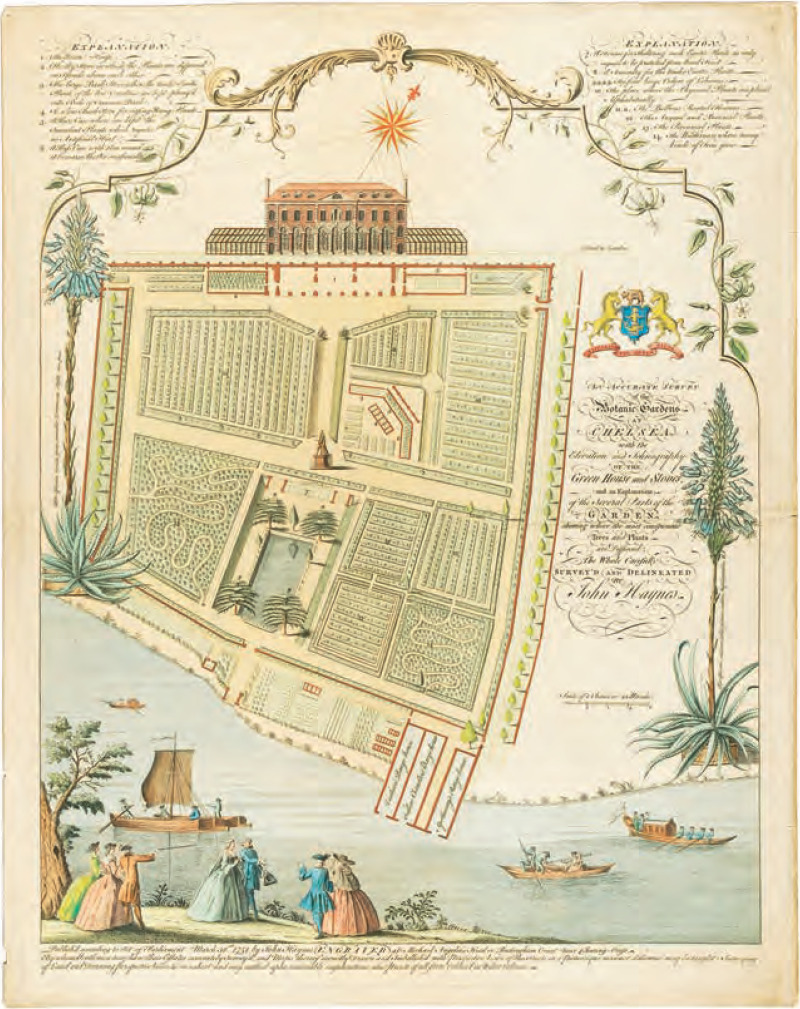
The Chelsea Physic Garden was founded in 1673 by the Worshipful Society of Apothecaries as a teaching garden and today, 350 years later, it is still a pioneer in plant learning and houses an outstanding collection of useful and medicinal plants. The garden has had a tumultuous history, and a difficult beginning but the foundations are still there today. Within 3 years of the founding the garden was enclosed in a wall which created the unique microclimate it enjoys and by 1681 the first glasshouse was installed, heated by a stove. By 1683 four Cedars of Lebanon were planted, becoming known as the ‘Chelsea Ceders’ and marvelled at, for no tree like them had been seen before in the British Isles. Three of these cedars became the first to grow cones in the UK and, through cloning and their seeds, gave life to many more and though the original Chelsea Ceders no longer survive their progeny do.
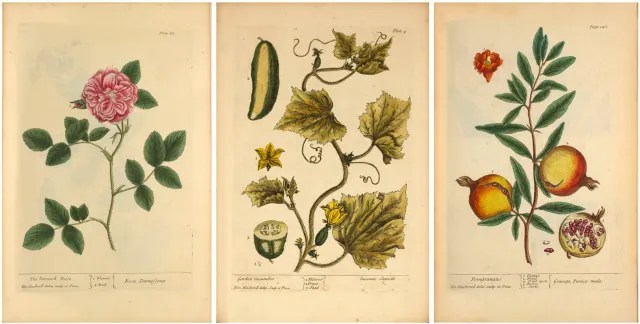
The garden also was the muse of Elizabeth Blackwell, a botanical illustrator who created the publication ‘A Curious Herbal’ in 1735 under somewhat inglorious circumstances. Her husband Alexander had run up questionable debts from un-apprenticed practice as a print-maker and incarcerated in Newgate Gaol. In order to pay the trade debts Elizabeth, realising that an illustrated guide was needed for physicians to reference the medicinal properties of plants, began the herbal with support from the Garden’s Isaac Rand and Sir Hans Sloane after the latter saw her preliminary botanical drawings. Elizabeth drew, engraved and coloured her illustrations sourced direct from specimen plants in the Garden and her husband, from his dark little cell in Newgate, where no plant would set root, provided the descriptions and nomenclature. In six years she had created a work of both academic utility and functional beauty. The naturalist Carl Linnaeus affectionately gave Elizabeth the nickname ‘Botanica Blackwellia‘ and the herbal went on to raise enough money to free the errant Alexander from prison. His story ends in Sweden where upon becoming embroiled in a shady plot to alter the Swedish succession he was beheaded!
A gentler end for Elizabeth however as she appears to have lived a quieter life. During the creation of the herbal she resided on Paradise Row at 4 Swan Walk, next to the Garden, but beyond that no more than a vague address on Old Bond Street betrays her later years. Upon her death she was lain to rest in Chelsea Old Church where her name can be seen today on a plaque celebrating the ‘memory of four Chelsea Women distinguished by their learning and piety’.
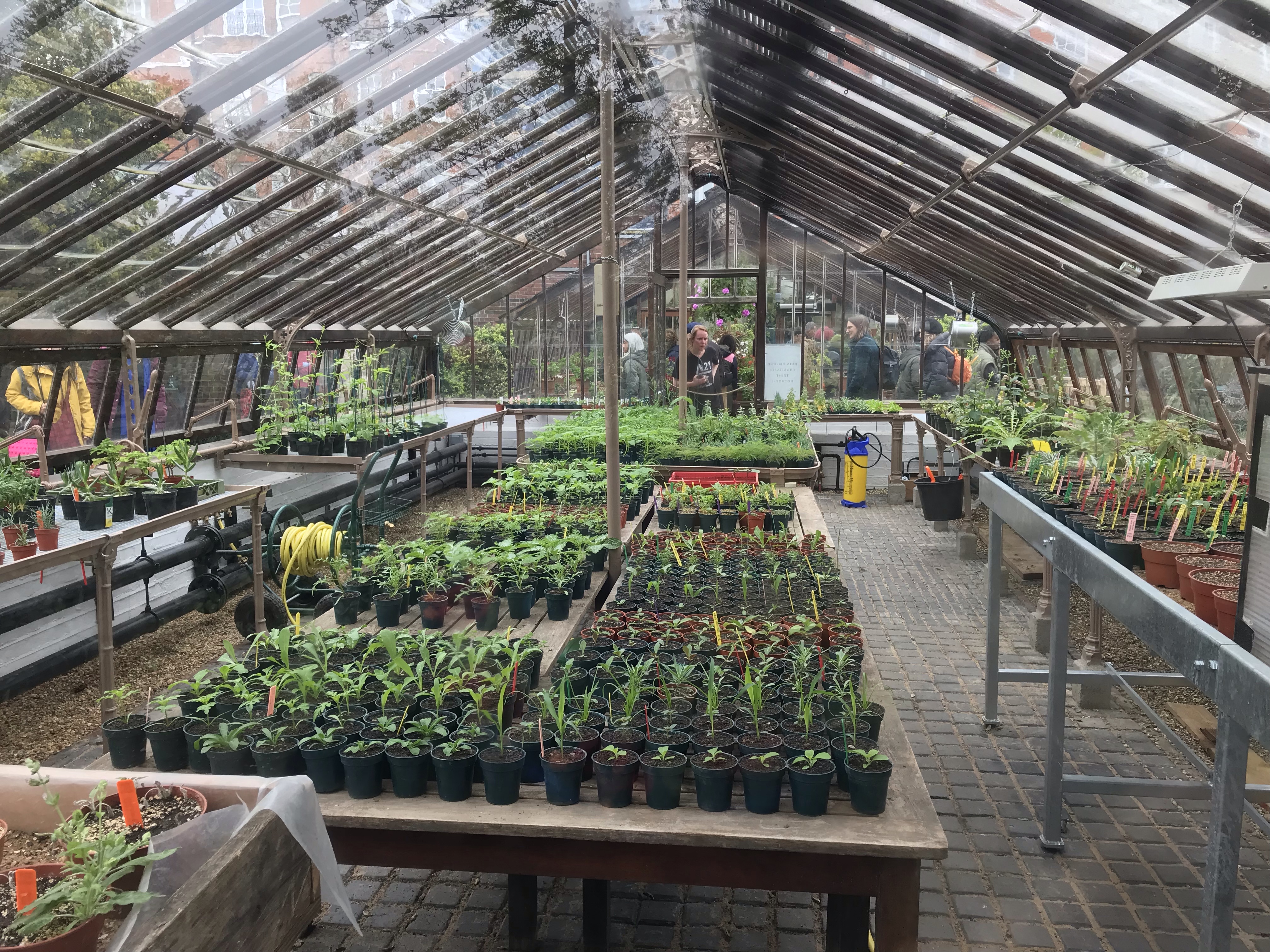
It was an overcast day when we visited on the annual open day but that didn’t detract from the promise and enjoyment of the garden. The glasshouses are open again after lengthy renovation and it was wonderful to look in the propagation houses and see the rows upon rows of seedlings in colour coded and ordered collections. In addition there were plants for sale and seed merchants – an irresistible lure for us botanical pilgrims! We picked up some excellent herb seeds from Earthsong Seeds for the herb beds.
The smaller individual gardens that make up the whole are arranged in groupings of use and geographical growing location. In a small echo of the previous post there was a small Mediterranean maquis garden, the herbs thriving in synchronicity in the walls of the Physic Garden as they had in the walls of the Corsican citadel. A scented simulacra.
To write about the entirety of the Garden in one post wouldn’t do it justice, and it is a place I am sure to return to and write about again. So for this post I will concentrate on one of the smaller gardens in the Physic Garden.
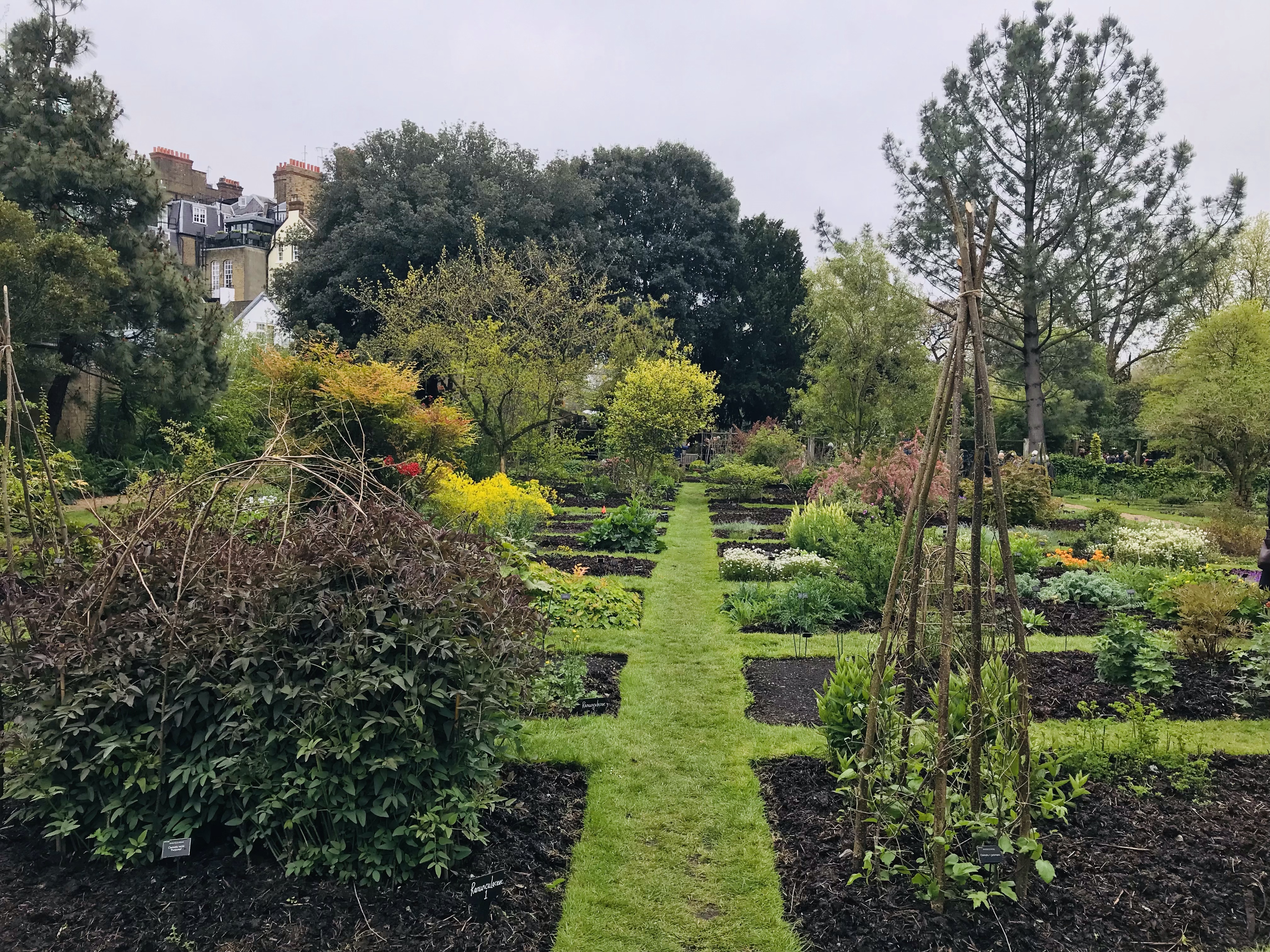
Of great interest to me was the dyer’s garden, something we have planned to establish in the PHG. As it was early in the season we only had the green shoots and leaves of the plants showing but it gave a good idea of structure and the habit of the plants that we can apply as well as ideas for varieties of dye plant.
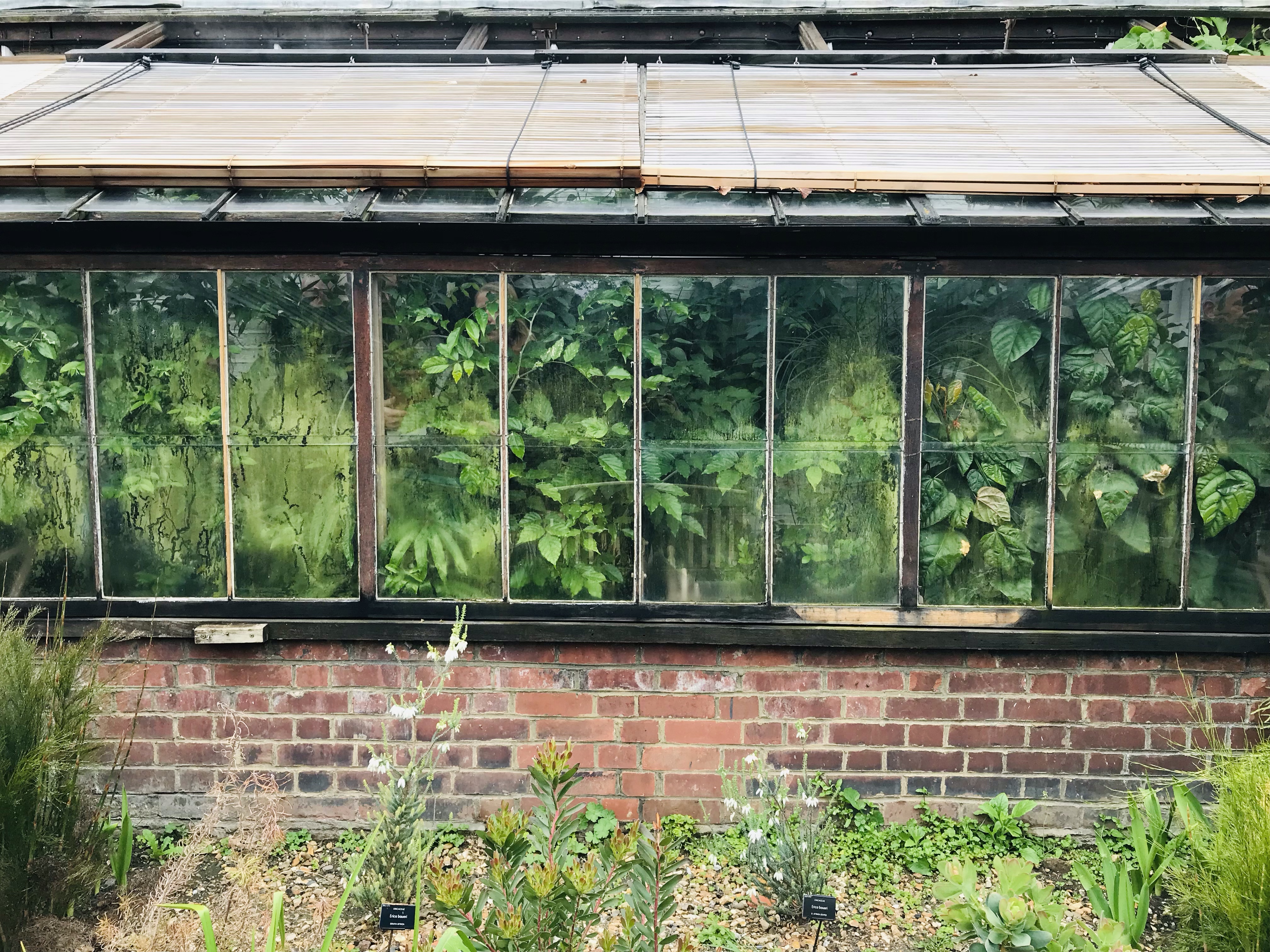
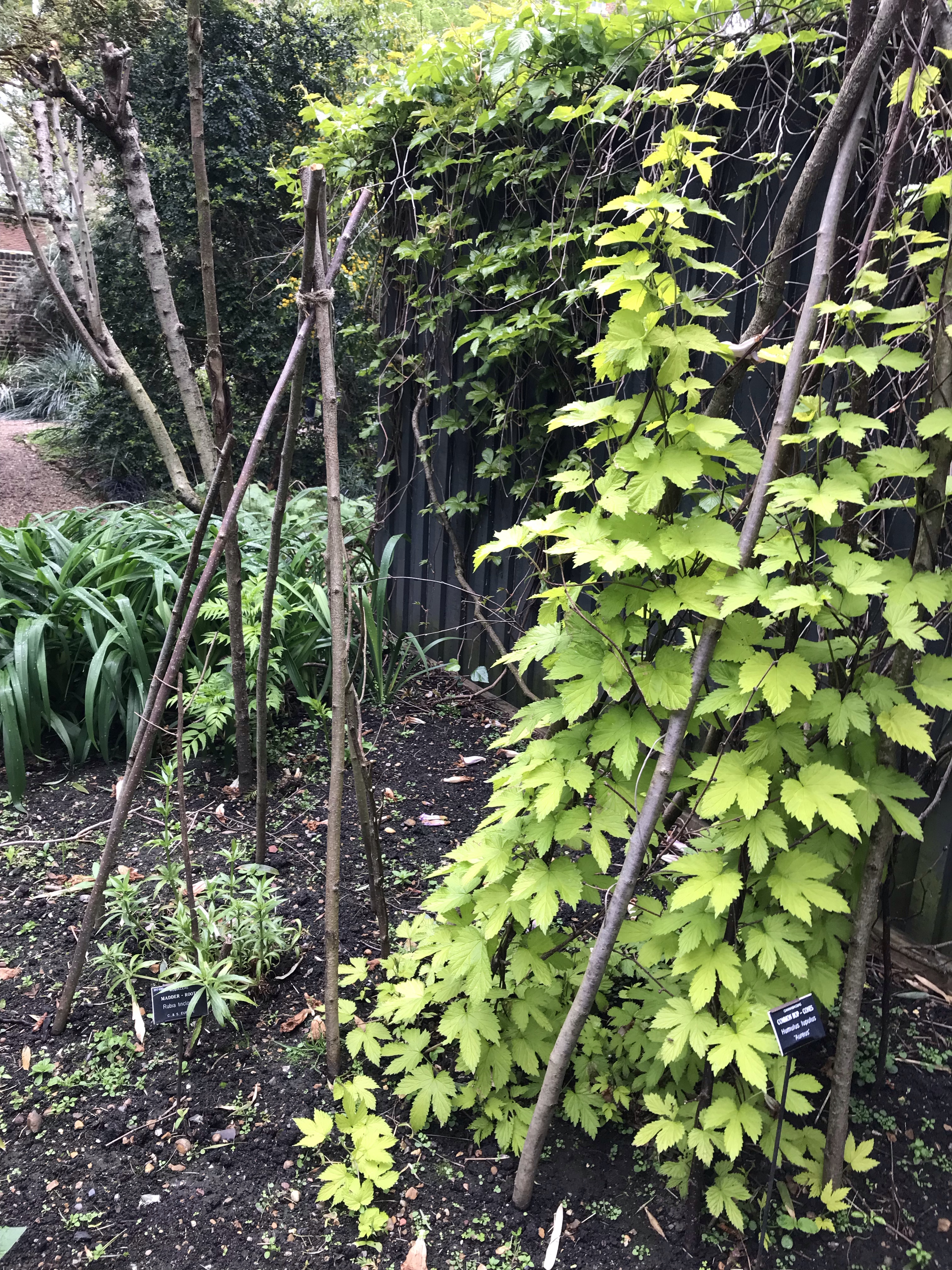
In the first photo you can see the upright supports for Madder (Rubia tinctorum) which provides red from it’s roots and Hops (Humulus lupulus) which delivers a golden yellow from it’s leaves and strobiles.
Through the Rubiaceae family Madder is related to the common wild plants Cleavers/Common Bedstraw (Galium aparine) and Lady’s Bedstraw (Galium verum) which also retain the familial trait of having dye producing roots. Cleavers, lacking the bold red of it’s cousin it can, however, produce a more subtle coral pink, and, as a plant most often proscribed as a ‘weed’, it further earns it’s place in the useful plant almanac by being edible as well. Hops, of course, are used most commonly in brewing but the shoots in spring are a delight lightly cooked, a slightly astringent herbal taste with bold grassy green and the subtle fug of hop bittering on the after taste. An ale lovers asparagus!
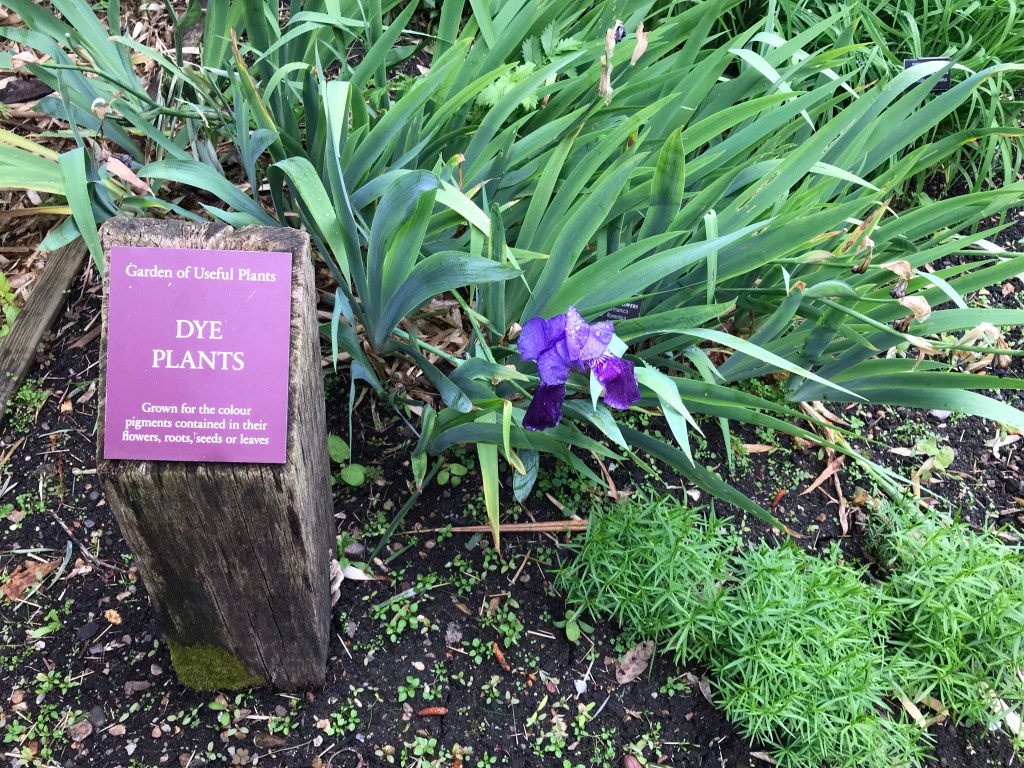
To complete the Rubiaceae quartet, Sweet woodruff (Galium odoratum), seen in the second photo below, bottom right, gives a muted red from the roots and tan from the vegetative parts of the plant.
Like all things botanical establishing a garden takes time and from the dye garden in the Chelsea Physic Garden we were able to take some good pointers for our own planting plans. The use of climbing structures and plants I hadn’t realised were dye plants opened up the potential to create a dye garden that was more that just a crop garden – it can also be aesthetically pleasing with obelisks of climbing star-flowered Madder and acid green Hops, bright yellow and red sprays of Dyer’s Coreopsis, orange Calendular and blunt thistled tops of Safflower, with Hopi Sunflower, it’s seeds yielding black, looming above.
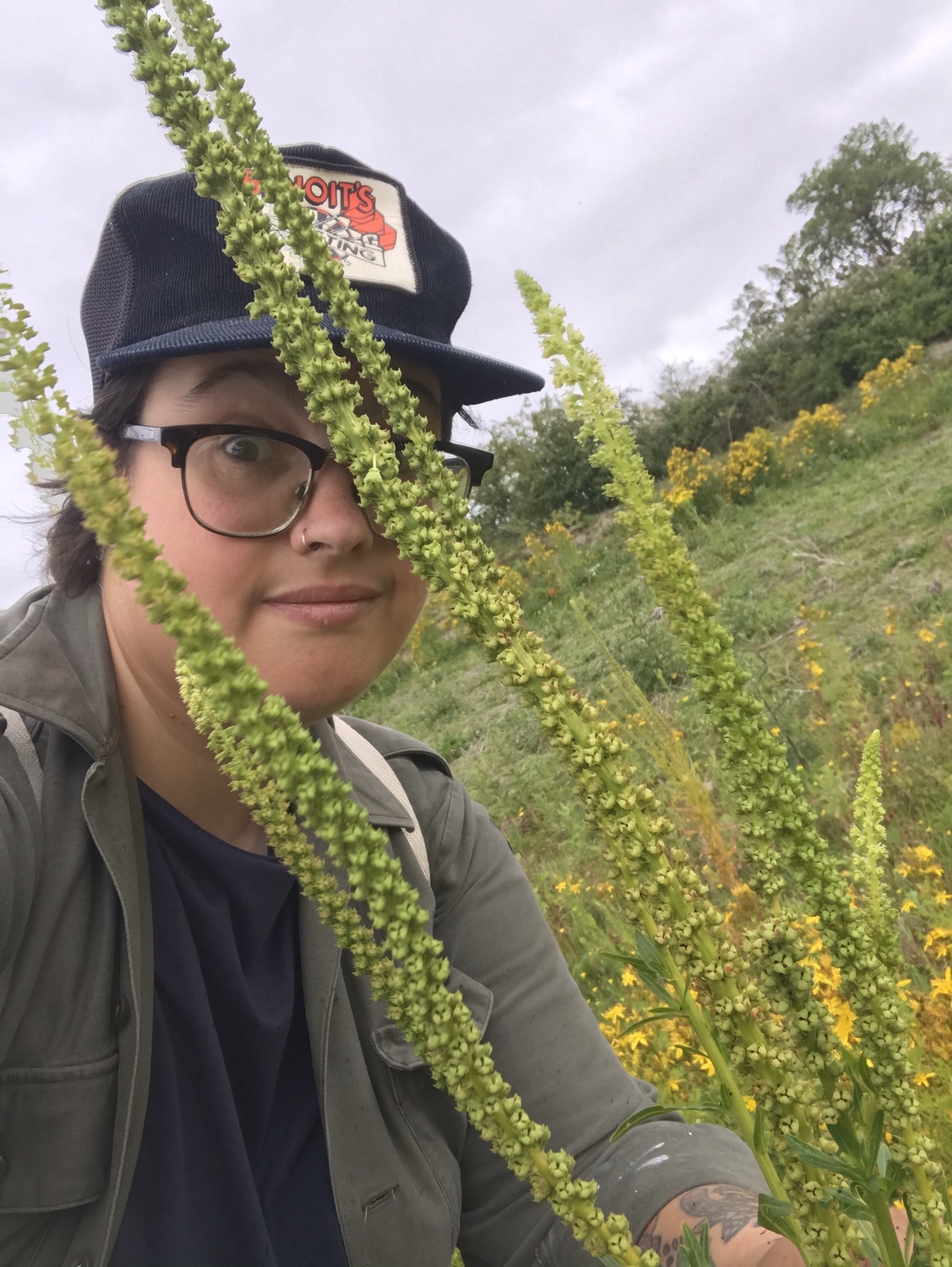
Among them all the ancients: the yellow froth of indigo producing Woad and the gothic spires of Weld stilettoing through them, the king in yellow.
An excellent reference for dye plants can be found here: The Plant Lady – Natural Dye Guide. It is certainly a surprise and delight to discover the potential of plants previously overlooked.
All this is still in the planning and I look forward to documenting our progress as we go, sourcing and saving seed and eventually using the plants to experimentally dye with. In addition return visits to Chelsea Physic garden to study the progress and planting will be made!
For now, while we plan, we can turn to the humble so-called weeds that inhabit the plot, for there are many wild plants already growing in the space that can be used as dye plants: Stinging nettles (Urtica dioica) can make an olive green dye, Cow Parsley (Anthriscus sylvestris), which grows in billowing profusion in the garden, a gentle greenish-yellow, Greater Burdock (Arctium lappa), our tap-rooted nemesis, another yellow. Dandelion roots can be also be dried and used.
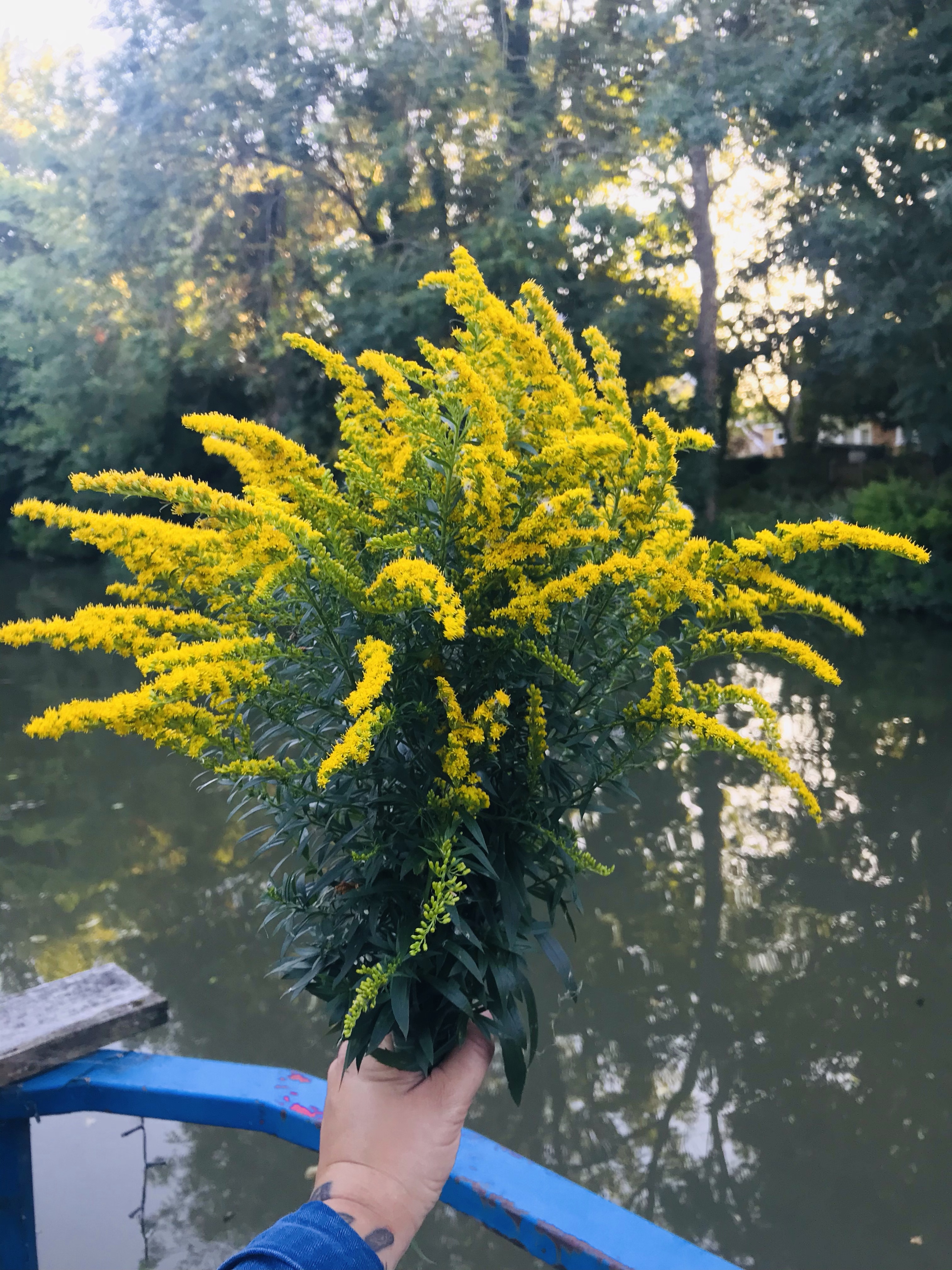
Outside the garden on the riverbank and towpath, Meadowsweet, Alder, Alkanet, Tansy, Goldenrod and Comfrey are all wild plants that can bring colour too – while we build the garden we can learn and experiment with the plants available already before we expand and harness their kin in our dye bed; hidden colour from plants of undervalued use. But when these plants are finally seen with an un-jaundiced eye and bestowed with the value they deserve, their true colours are not the drabness of weeds but a riot of natural and harmonious hues that sing through their fibres, a hidden glow waiting to smoulder out of roots, leaves and flowers through gentle alchemy.
These weeds have a secret, because before we have sown one seed, plotted planting plans or turned one clod of earth, the dyer’s garden is already waiting…
 Welcome to The Pumphouse Garden
Leave a comment